Pricing
What websites cost in Australia
Australian website pricing index — costs published as bands, with sample size, date, scope and GST stated, what a band tells you, and what it does not.
In short. This section takes apart the figure at the bottom of a website quote: what the money buys, which decisions move it most, and the four things nearly every Australian cost page omits — GST treatment, ownership of the delivered site, consumer guarantees, and what happens if the build is not delivered.
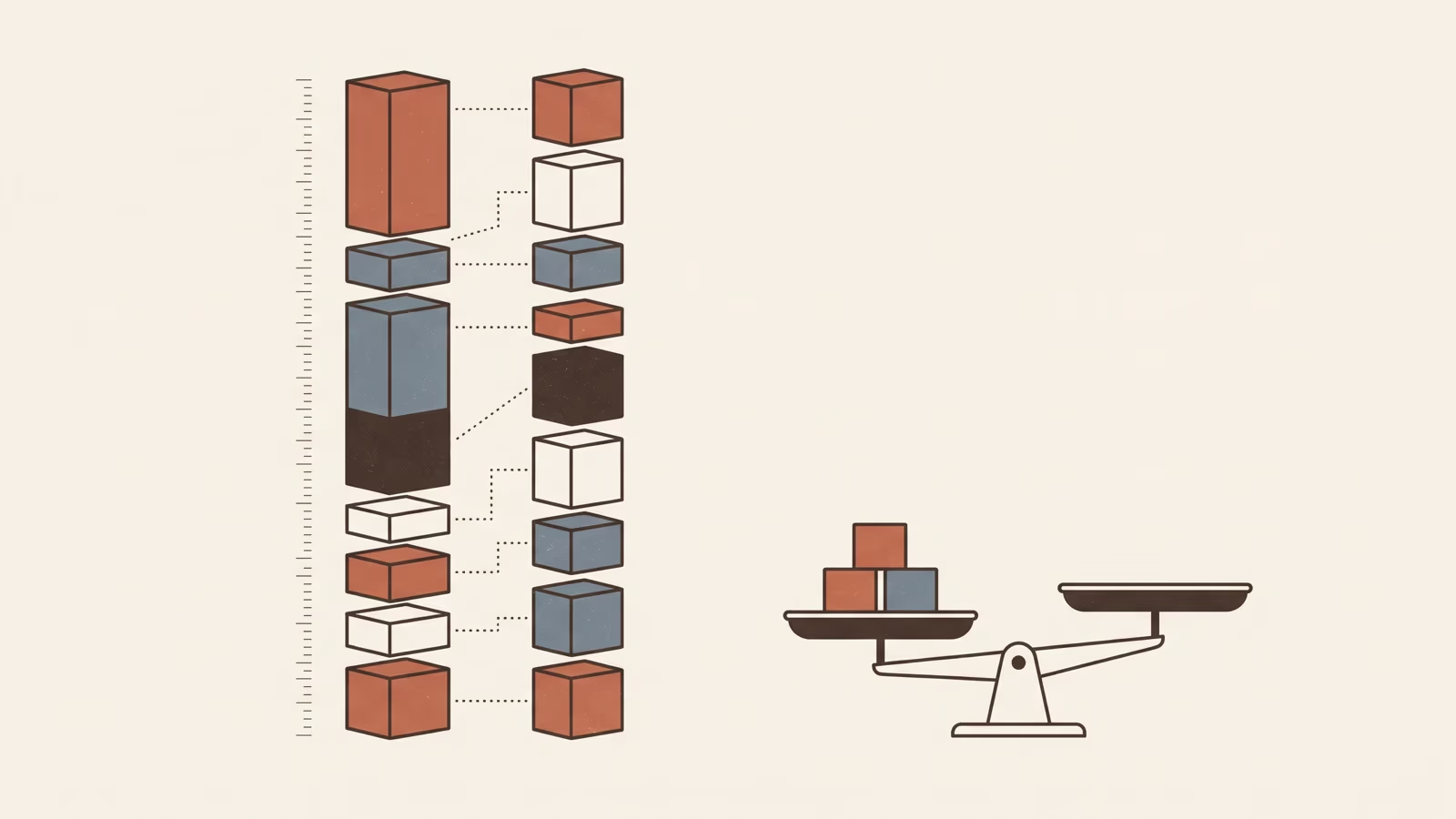
Most business owners meet the cost of a website exactly once: as a figure at the bottom of a quote, with nothing attached to explain how it was reached. A single number tells you almost nothing. You cannot tell from it whether GST has been added, whether the writing is included, whether you will own the site afterwards, or whether anything at all happens after launch day. If the figure feels high, you have no way to check. If it feels low, you have no way to know what was left out.
This section takes that number apart.
What this Australian website cost and pricing index is
It is a record, published in public, of what website work costs in Australia and what sits behind each cost. Every page here is built to the same rule: if a figure is stated, the conditions attached to it are stated at the same time and with the same prominence. That means the sample size the figure came from, the date it was current, the scope it covers, and whether GST is included or excluded.
That rule is unremarkable in any other field where money is discussed. It is close to absent in this one. Nine Australian pages about the cost of a website were checked on 31 July 2026 and the results are recorded in research/pricing-bands.json. Not one of them states GST treatment. Not one states who owns the delivered site. Not one mentions consumer guarantees under Australian Consumer Law, and not one says what happens if the build is never delivered. Every published figure is asserted without a source.
So the standard here is low, and clearing it is not an achievement. It is just the minimum a business owner needs in order to read a quote properly.
Thirty-six opportunities to state a material fact. Taken zero times. This is the gap the pricing section exists to fill.
Source: research/pricing-bands.json · figures gathered 31 July 2026.
Show the numbers behind this chart
| Material fact | Pages stating it | Pages checked |
|---|---|---|
| States GST treatment | 0 | 9 |
| States who owns the delivered site | 0 | 9 |
| Mentions ACL consumer guarantees | 0 | 9 |
| Cites a source for its figures | 0 | 9 |
Why website cost and development figures are banded, not fixed

A fixed price for “a website” is a fiction, because “a website” is not one thing. Two builds that look identical from the outside can differ by a factor of several in the work required, depending on how many pages there are, who writes them, whether photography exists, whether anything has to connect to a booking system or an accounting package, and whether an old site has to be migrated with its links preserved.
A band is an honest shape for that. It says: work of roughly this description has landed roughly in this region, across this many projects, in this period. It does not pretend to know your job.
| What it is | Typical | Range | Projects |
|---|---|---|---|
| Small business brochure site | Withheld — not yet reviewed | ||
| Standard business website | Withheld — not yet reviewed | ||
| Custom designed website | Withheld — not yet reviewed | ||
| Ecommerce / online store | Withheld — not yet reviewed | ||
| Redesign of an existing site | Withheld — not yet reviewed | ||
| Ongoing maintenance (per month) | Withheld — not yet reviewed | ||
| Hourly rate for ad-hoc work | Withheld — not yet reviewed | ||
Figures not published. The pricing dataset has not been reviewed and released, so no figure is shown here. The site is built to refuse to render prices in this state rather than show a provisional number. What is published and what is not.
Why every figure on this page is withheld (6 reasons)
- dataset status is "PLACEHOLDER_UNREVIEWED", not "VERIFIED"
- dataset publishable is false, not true
- GST treatment has not been stated — ACL s48 requires it explicitly, at equal prominence
- the dataset has not been dated — undated figures are not citable
- the collection method has not been written down — an unsourced figure is an assertion
- no band passes the band-level audit
What a band tells you, and what it does not

A band is useful for three things. It tells you the rough order of magnitude of the work, so you can tell a small job from a large one. It tells you whether the quote in your hand sits in the same region as comparable work. And it tells you which questions are worth asking, because when a quote sits well outside a band there is always a reason, and the reason is usually interesting.
A band is not a quote, cannot be one, and should never be treated as one. It does not know the state of your content, the deadline you are working to, the systems you already pay for, or the condition of the site being replaced. Anyone who quotes your job from a band alone has not looked at your job.
The four things nearly every cost page leaves out
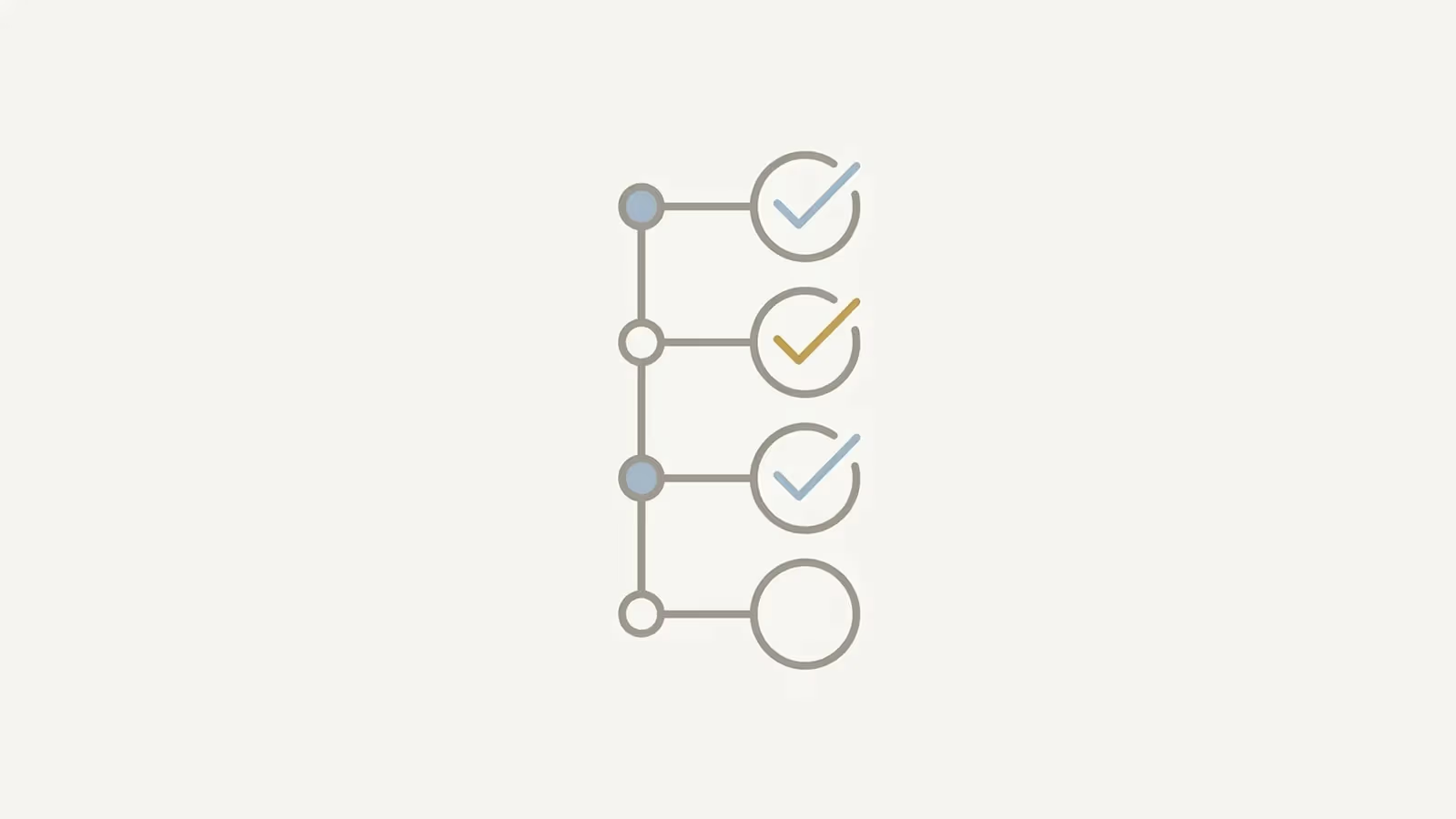
If you read only one part of this section, read this list, then check whichever quote you are holding against it.
- GST. Whether the figure quoted is inclusive or exclusive of GST changes what leaves your bank account by ten per cent. If the quote does not say, it is not a price yet.
- Ownership. Who owns the design, the code, the content and the domain when the invoice is paid. This is decided by the contract, not by custom, and it is not always you.
- Consumer guarantees. Services supplied to Australian consumers carry guarantees under Australian Consumer Law that a contract cannot simply write away. Most cost pages behave as though this body of law does not exist.
- Non-delivery. What happens to your money, your content and your domain if the build stalls or the supplier disappears. Ask before you pay a deposit, not after.
What drives web design cost in Australia: scope, WordPress, ecommerce and custom development
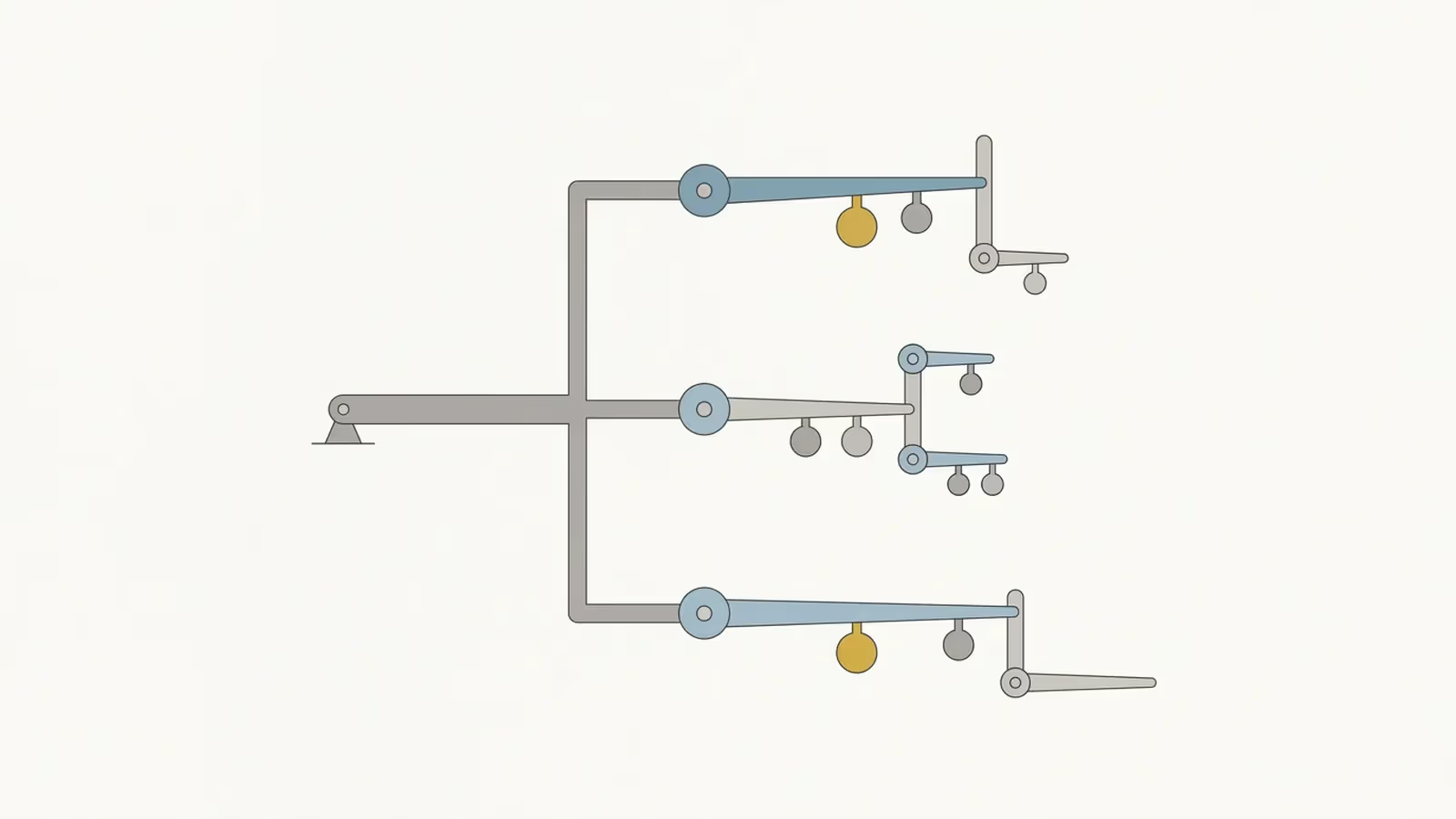
Every figure in this Australian website pricing index moves on the same handful of inputs, whatever the final AUD number turns out to be. Scope is the largest lever: a five-page brochure site and a fifty-page custom development project are not the same purchase, even quoted by the same web designer. Platform matters too — a WordPress build, an ecommerce store and a fully custom build price differently for a similar brief, and website development cost sets out how the build side of that figure is actually reached, separate from the design decisions covered on design cost. A WordPress designer, an ecommerce specialist and a custom-development shop will each price the same brief differently, in AUD, for reasons that have nothing to do with the page count alone. Ongoing costs — hosting, a monthly maintenance retainer — sit outside the one-off figure and continue after the invoice is paid.
Why there are no website cost figures on these pages yet
The dataset behind this section is marked PLACEHOLDER_UNREVIEWED, and the site is built so that it physically cannot render a figure while that flag is set. That is deliberate. It would take about ten minutes to publish plausible-looking numbers, and they would be worth nothing, which is roughly what the existing numbers on this topic are worth.
Figures will appear when they come from delivered projects, when each published band has enough projects behind it that no individual client can be identified from it, and when the method of collection is written down and can be checked. Until then, the words are here and the numbers are not. The reasoning in these pages holds either way, because the reasoning is what lets you read a quote. The numbers only tell you where you sit.
The full state of the dataset, including which bands are excluded and why, is set out in the pricing dataset.
How to use this website cost and pricing index: design cost and ongoing maintenance
If you have a quote in front of you, start with the cost structure behind a quote, then work through the questions listed there against your quote. If you are being sold a package, read what a package includes and excludes before you sign, particularly the part about what gets removed to hit a package figure. If you run a small business and are not sure how much site you actually need, small business website packages is the shortest route. If you are selling products, ecommerce website packages explains the costs that sit outside the build and continue forever. And if nobody has mentioned maintenance to you at all, the ongoing cost of running a website explains what you have been left holding.
Common questions about website pricing
Why are the figures on these pages withheld? The dataset behind them is marked PLACEHOLDER_UNREVIEWED and the site is built to refuse to render a currency figure while that flag is set. The build fails rather than publishes. Figures will appear when they come from delivered projects, when each band has at least ten projects behind it, and when the collection method is written down and can be checked.
Is a band the same as a quote? No. A band says that work of roughly a given description has landed in roughly a given region across a number of projects in a period. It does not know the state of your content, your deadline, the systems you already pay for, or the condition of the site being replaced. Anyone who quotes your job from a band alone has not looked at your job.
What should a quote state about GST? Whether the figure is inclusive or exclusive of GST, and the total payable including GST. If a quote does not say, it is not yet a price. Across the nine Australian cost pages checked on 31 July 2026, none stated GST treatment at all.
Who writes this, and the AUD search demand behind it
Search demand for this question was measured for Australia on 31 July 2026 and recorded in research/national-volume-au.json and research/ai-vol-questions.json: around 390 searches a month for the cost query and its close variants, and 468 prompts a month to AI assistants for the question of how much a website costs in Australia. A lot of people are asking. Very few are being answered with anything they can check. For where price sits inside web design as a whole discipline, start with web design in Australia.
Evidence for this page
This page exists because the demand below was measured, not assumed. The figures are search-market data about the topic — they are not prices.
- Entity this page targets
- australian website pricing index
- Measured Google volume
- no data
- Keyword difficulty
- no data
- Advertiser cost per click
- no data
- AI assistant volume
- no data
- Advertiser competition
- no data
- Measured on
- 31 July 2026
- Search results inspected for intent
- No
Source: research/national-volume-au.json · DataForSEO Labs, location_code 2036 (Australia), language en · pulled 31 July 2026.
Provenance
Written by Australian Website Design. Published 2026-07-31, last updated 2026-07-31.
Sources
- Pricing band dataset and competitor cost-page audit —
research/pricing-bands.json(accessed 2026-07-31) - National keyword volume and difficulty, Australia —
research/national-volume-au.json(accessed 2026-07-31) - Competitor cost guide (Webics), cited as a third-party published claim (accessed 2026-07-31)